we built a narrative focused on how your designs served as the “Visual North Star” for the startup’s global expansion, translating complex environmental data into a scalable, modular system that helped secure major funding.
Reimagining Environmental Health for a Global Stage
The Story: “The founders came to me with a problem: they had the users, but they needed to scale the vision. They wanted to move from just ‘Air Quality’ to a full environmental suite—wildfires, pollen, and UV. In our first two meetings, we realized the current UI couldn’t handle that much data without feeling like a medical report. My task was to keep it ‘Macedonia-easy’ but ‘Global-ready’.”

Problem & Pivot: From "Spreadsheet" to "Snapshot"
-
The Challenge: Environmental data is dense. My early explorations showed that trying to show every pollutant at once created massive cognitive load.
-
The Decision: We moved away from “Data First” to “Answer First.” I fought to prioritize the “Current Exposure” gauge as the anchor. If a user is checking the app while walking out the door, they need an answer in 1 second, not a history lesson.
Smart Forecasting
I designed the “Best time to go outside” curve to translate complex pollution fluctuations into a simple, actionable schedule for the user.

New
Pollen tracking
Instead of generic city data, we added filters for specific allergens, making the app feel like a personal health companion rather than a government sensor.

What We Delivered
Beyond the UI, the delivery provided the founders with a Strategic Visual North Star; a conceptual proof that successfully bridged the gap between a functional local tool and a fundable global startup. This included a modular UX framework capable of synthesizing high-density data—such as live wildfire tracking, pollen fluctuations, and UV exposure—into a scannable, human-centric dashboard.


Reflection & Impact: Beyond the Pixels. This project was a masterclass in “designing for momentum.” While not every feature moved into production immediately, the delivery achieved its primary business objective: Visual Credibility. By creating a high-fidelity vision of what AirCare could be, we gave the founders the leverage they needed to secure startup funding and pivot from a local utility to a global environmental authority.
Working “guy-to-guy” with founders under tight deadlines taught me the value of Visual Logic over Quantitative Research.
When insights are thin, a senior designer’s job is to synthesize competitive landscapes and user psychology to build a “North Star” that everyone can rally behind. It reinforced my belief that sometimes, the most valuable deliverable isn’t a final UI kit—it’s the strategic alignment that allows a company to scale.
Watching the platform evolve into its current global form (now rebranded and expanded) is the ultimate validation of our early brainstorming. It’s a reminder that good design isn’t just about solving today’s problem, but about building a modular foundation that can support the ambitions of tomorrow.
Explore More
Explore More
Explore More
Explore More
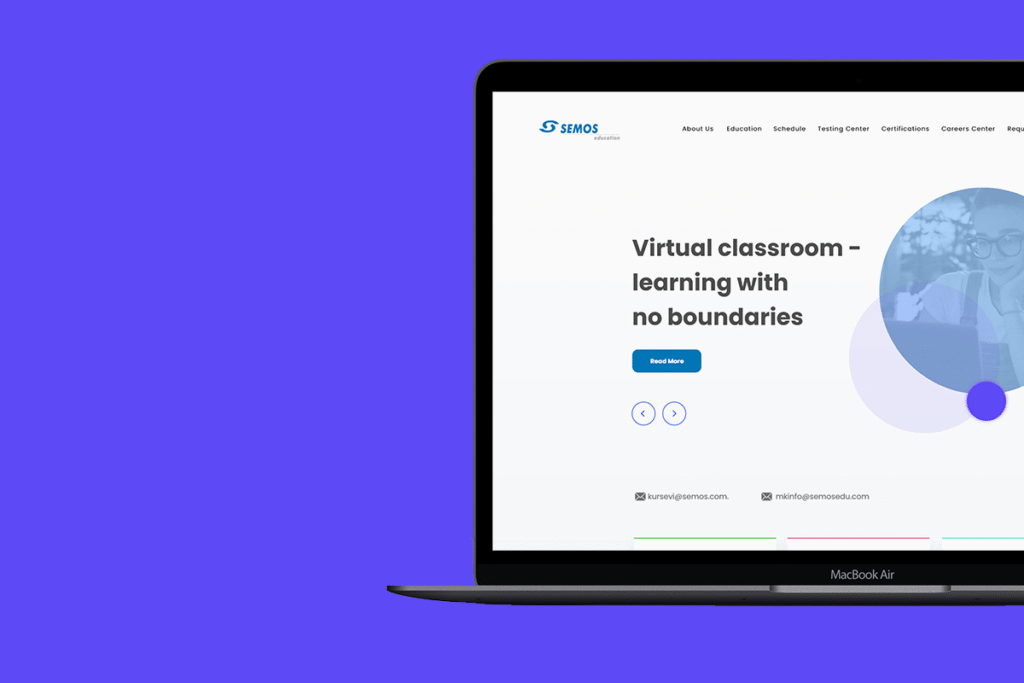
Semos education Re-Design
Semos education Re-Design

Spock and Navis